
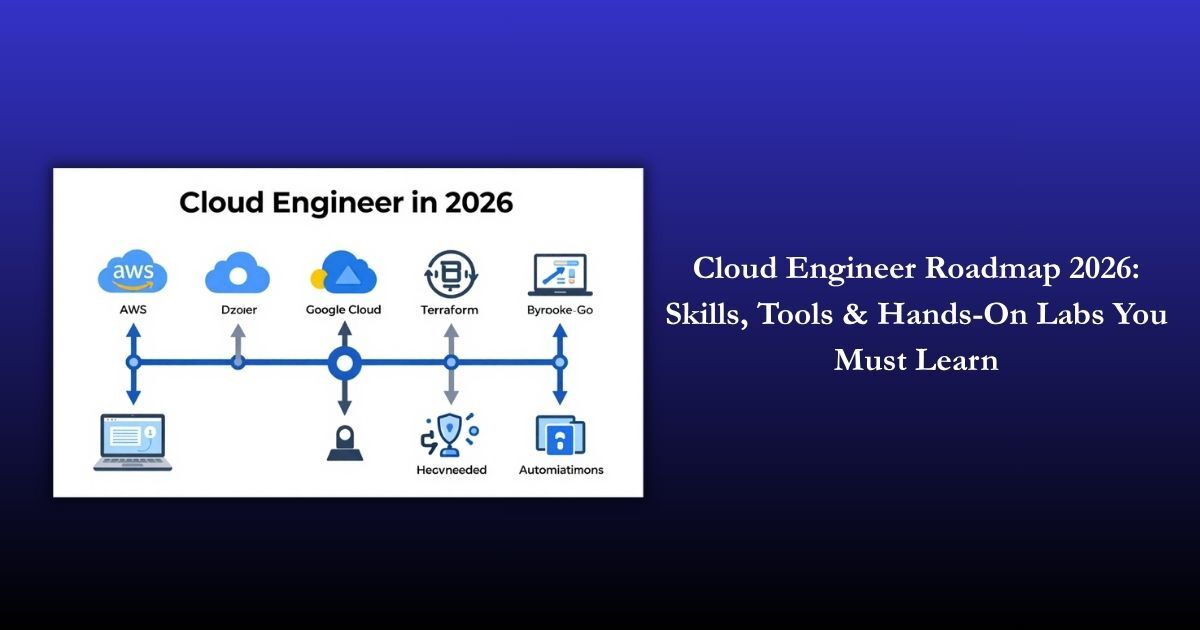

Cloud Engineer Roadmap 2026: Skills, Tools & Hands-On Labs You Must Learn

Cloud Engineer Roadmap 2026: Skills, Tools & Hands-On Labs You Must Learn
Cloud computing is one of the fastest-growing fields in the tech industry. As businesses continue to shift to cloud-based infrastructure, the demand for skilled cloud engineers is increasing rapidly. If you are planning to build a career in this field, understanding the right roadmap is essential.
In this guide, we will walk you through the complete cloud engineer roadmap for 2026, including the skills, tools, certifications, and hands-on labs you must learn to succeed.
Introduction
In 2026, cloud computing is no longer optional—it is a necessity for businesses. From startups to large enterprises, everyone relies on cloud platforms for scalability, security, and performance.
As a result, cloud engineers are among the most in-demand professionals. However, becoming a cloud engineer requires a structured learning path.
This guide will help you understand exactly what to learn and how to get started.
What Does a Cloud Engineer Do?
A cloud engineer is responsible for designing, deploying, and managing cloud-based systems.
Key Responsibilities:
- Setting up cloud infrastructure
- Managing servers and storage
- Ensuring security and performance
- Automating deployments
Types of Cloud Engineers:
- Cloud Developer
- DevOps Engineer
- Cloud Solutions Architect
Each role requires a mix of technical and problem-solving skills.
Basic Prerequisites to Start Cloud Engineering
Before diving into cloud technologies, you need some basic knowledge.
1. IT Fundamentals
Understanding operating systems and system architecture.
2. Networking Basics
- IP addresses
- DNS
- HTTP/HTTPS
3. Programming Basics
- Python (most recommended)
- Basic scripting knowledge
These fundamentals will make learning cloud much easier.
Step-by-Step Cloud Engineer Roadmap 2026
Let’s break down the journey step by step.
Step 1: Learn Cloud Computing Fundamentals
Start with the basics.
Topics to Cover:
- What is cloud computing
- Types: IaaS, PaaS, SaaS
- Public vs Private cloud
This builds your foundation.
Step 2: Choose a Cloud Platform
You should focus on one platform initially.
Popular Options:
- AWS (Amazon Web Services)
- Microsoft Azure
- Google Cloud Platform (GCP)
Tip: AWS is the most widely used, so it’s a good starting point.
Step 3: Learn Programming & Scripting
Automation is a key part of cloud engineering.
Languages to Learn:
- Python
- Bash scripting
- PowerShell
These help in managing cloud resources efficiently.
Step 4: Understand Networking & Security
Cloud systems rely heavily on networking.
Important Concepts:
- Virtual networks
- Firewalls
- Identity and access management (IAM)
Security is critical in cloud environments.
Step 5: Learn DevOps Tools
DevOps tools help automate workflows.
Essential Tools:
- Docker (containerization)
- Kubernetes (container orchestration)
- CI/CD tools (Jenkins, GitHub Actions)
These tools are widely used in real-world projects.
Step 6: Work on Hands-On Projects
Practical experience is crucial.
Project Ideas:
- Deploy a website on cloud
- Create a cloud storage system
- Build automated pipelines
Hands-on labs make you job-ready.
Essential Skills Every Cloud Engineer Must Have
Technical Skills
- Cloud platforms (AWS, Azure, GCP)
- Networking and security
- Scripting and automation
Soft Skills
- Problem-solving
- Communication
- Team collaboration
Both technical and soft skills are important.
Top Tools You Must Learn in 2026
To succeed as a cloud engineer, you need to master key tools.
Cloud Platforms
- AWS
- Azure
- GCP
DevOps Tools
- Docker
- Kubernetes
Infrastructure as Code
- Terraform
Version Control
- Git
These tools are essential for modern cloud workflows.
Best Certifications for Cloud Engineers
Certifications help validate your skills.
Popular Certifications:
- AWS Certified Solutions Architect
- Microsoft Azure Fundamentals
- Google Associate Cloud Engineer
These certifications improve job opportunities.
Hands-On Labs and Practice Ideas
Practice is the key to mastering cloud engineering.
Try These:
- Build a cloud-hosted application
- Set up load balancing
- Automate deployment using CI/CD
The more you practice, the more confident you become.
Common Mistakes to Avoid
Avoid these common mistakes:
- Skipping fundamentals
- Not practicing enough
- Learning too many tools at once
- Ignoring security concepts
Focus on building strong basics first.
Career Opportunities and Salary Trends
Cloud engineering offers excellent career growth.
Job Roles:
- Cloud Engineer
- DevOps Engineer
- Cloud Architect
Salary Expectations (2026):
- Entry-level: High demand with good starting salary
- Experienced professionals: Very high earning potential
Cloud skills are highly valued across industries.
Tips to Become a Successful Cloud Engineer
1. Keep Learning
Technology evolves quickly, so continuous learning is essential.
2. Build a Portfolio
Show your projects on GitHub.
3. Get Certified
Certifications add credibility.
4. Network with Professionals
Join communities and forums.
Final Thoughts
Becoming a cloud engineer in 2026 is a smart career choice. However, success requires a clear roadmap and consistent effort.
To summarize:
- Learn fundamentals first
- Choose a cloud platform
- Master tools and technologies
- Practice with real projects
- Earn certifications
With dedication and the right approach, you can build a successful career in cloud engineering.
Start your journey today and take the first step toward a high-demand, future-proof career.